

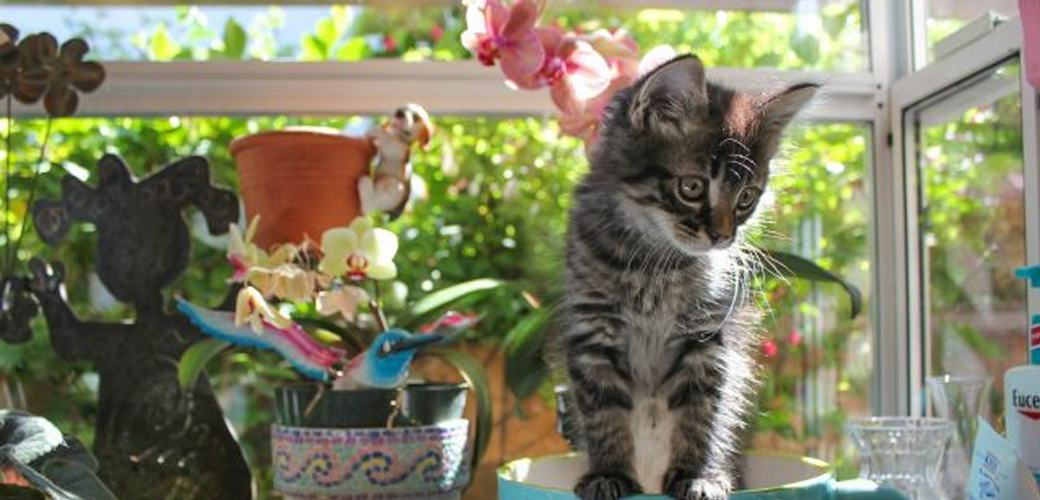
We live surrounded by plants. In nature, in our gardens, in our homes: people love flowers and plants. However, we must not forget that a small portion of those plants may be harmful to our health and that of our pets, including cats.
Which cats are at risk?
Most cats are fussy eaters and careful about what they eat, which is why poisoning in cats is not that common. Kittens and young, curious cats are generally more at risk, especially if they do not go outside. A (young) cat often nibbles on plants out of boredom. Therefore, remove all toxic plants when a cat lives indoors.
A cat is not a plant eater!
Every plant, even cat grass, has an irritating effect in your cat's digestive system which can cause vomiting. Yet your cat will still enjoy nibbling on grass. If there is none available, it will turn to other, less suitable plants. The Dieffenbachia in particular is deadly dangerous for the cat.
Prevention indoors
Remove all potentially dangerous houseplants to prevent any unnecessary risk. Kittens and cats that do not go outside are particularly at risk. Below you will find a list of houseplants that are unsuitable for your cat.
Prevention outdoors
Outside, it is more difficult to protect your cat from dangerous plants. You can at least try to reduce the risk by removing the most dangerous plants from your own garden. Optionally write down the (Latin) names of those plants.
What are the signs of poisoning?
Consult a vet immediately if your cat suddenly feels unwell, vomits frequently, has severe diarrhoea or shows serious irritation of the skin and mucous membranes. Take your cat to the vet and bring a sample or label of the plant. Note the time of ingestion and a description of the symptoms.
Skin irritation
Contact with leaves, stems or sap of certain plants can cause itching or a sensitivity to sunlight. In your cat, the same plants can cause blisters or irritation of the mouth and gums. See the list below for an overview of plants with potentially irritating effects.
Toxic plants
The list below gives an overview of plants that may be toxic or deadly dangerous to your cat if ingested. Plants marked with an asterisk (*) may also cause skin irritation on contact.
Houseplants
- Alocasie
- Amaryllis
- Aphelandra
- Appeltje der liefde, zie Solanum
- Caladium
- Chrysant, zie Dendranthema *
- Codiaeum
- Croton, zie Codiaeum
- Cyclaam
- Dieffenbachia *
- Epipremnum aureum
- Hyacinth
- Hypoestes phyllostachya
- Ilex
- Kerstster, zie Euphorbia *
- Klimop, zie Hedera *
- Kruiskruid, zie Senecio
- Maretak of Mistletoe, zie Viscum
- Nerium oleander
- Oleander zie Nerium
- Oranjeboompje, zie Solanum
- Poinsettia, zie Euphorbia
- Senecio
- Varens
- Vingersboom, zie Schefflera *
- Vogelmelk, zie Ornithogalum
- Wonderboom, zie Ricinus
- Zuidenwindlelie, zie Ornithogalum
Garden plants
Lilies are also toxic to cats.
- Abrikoos, zie Prunus armeniaca
- Abrus precatorius
- Aconitum *
- Actaea
- Aesculus
- Afrikaantje, zie Tagetes
- Agrostemma githago
- Akelei, zie Aquilegia
- Aleurites
- Allium
- Alocasie
- Alstroemeria *
- Anagallis
- Anemoon
- Aquilegia
- Arisaema
- Aronskelk, zie Arum
- Arum
- Astragalus
- Atropa
- Avocado, zie Persea americana
- Azalea, zie Rhododendron
- Azijnboom, zie Rhus *
- Balsemien, zie Impatiens
- Berenklauw of Reuzenberenklauw, zie Heracleum mantegazzianum
- Blauweregen, zie Wisteria
- Bloedwortel, zie Sanguinaria
- Boerenwormskruid, zie Tanacetum
- Bolderik, zie Agrostemma githago
- Boterbloem, zie Ranunculus
- Brem, zie Cytisus
- Brugmansia
- Bryonia
- Buxus
- Caesalpinia
- Caladium
- Caltha *
- Catharanthus
- Celastrus
- Centaurea cyanus
- Cestrum
- Chistoffelkruid, zie Actaea
- Chrysant, zie Dendranthema *
- Clematis
- Colchicum
- Conium
- Convallaria majalis
- Cotoneaster
- Cupressocyparis leylandii *
- Cyclaam
- Cytisus
- Daphne *
- Datura *
- Delonix
- Delphinium
- Dendranthema *
- Dicentra
- Dictamnus
- Digitalis
- Doornappel, zie Datura *
- Dotterbloem, zie Caltha *
- Echium *
- Eik, zie Quercus
- Essenkruid, zie Dictamnus
- Euonymus
- Euphorbia *
- Ficus
- Flamboyant, zie Delonix
- Fluweelboom, zie Rhus *
- Frangula, zie Rhamnus
- Fremontodendron *
- Galanthus
- Gaultheria
- Gebroken hartje, zie Dicentra
- Geelhartje, zie Linum
- Gekapperde kalfsvoet, zie Arisaema
- Gevlekte scheerling, zie Conium
- Gloriosa superba
- Goudenregen, zie Laburnum
- Guichelheil, zie Anagallis
- Hedera *
- Heggenrank, zie Bryonia
- Helleborus *
- Hennep
- Heracleum mantegazzianum
- Herfsttijloos, zie Colchicum
- Hippeastrum
- Hortensia, zie Hydrangea
- Hyacinth
- Hydrangea
- Hyoscyamus
- Ilex
- Impatiens
- Incalelie, zie Alstroemeria *
- Ipomoea
- Iris
- Jasmijn, zie Jasminum
- Jasminum
- Juniperus sabina
- Kalmia
- Kardinaalsmuts, zie Euonymus
- Karmozijnbes, zie Phytolacca *
- Klaproos, zie Papaver
- Klimlelie, zie Gloriosa superba
- Klimop, zie Hedera
- Korenbloem, zie Centaurea cyanus
- Korstmos, zie Aleurites
- Laburnum
- Lampionplant, zie Physalis
- Lantana
- Lathyrus
- Laurierkers, zie Prunus laurocerasus
- Lelie
- Lelietje-van-dalen, zie Convallaria majalis
- Levensboomplant, zie Thuja *
- Leyland conifeer, zie Cupressocyparis leylandii
- Liguster, zie Ligustrum
- Ligustrum
- Linum
- Lobelia *
- Look, zie Allium
- Lupine
- Lycopersicon *
- Lysichiton
- Melia
- Mirabilis jalapa
- Moeraslantaarn, zie Lysichiton
- Monnikskap, zie Aconitum *
- Nachtschade, zie Solanum
- Nachtschone: zie Mirabilis jalapa
- Narcis
- Nerium oleander
- Nicotiana
- Nieskruid, zie Helleborus * Ornithogalum
- Oxytropis
- Paardekastanje, zie Aesculus
- Paeonia
- Papaver
- Paradijsvogelbloem, zie Strelitzia
- Parthenocissus
- Paternosterboontje, zie Abrus precatorius
- Peperboompje, zie Daphne *
- Pernettya
- Persea americana
- Perzik, zie Prunus persica
- Philodendron
- Physalis
- Phytolacca *
- Pioenroos, zie Paeonia
- Polygonatum
- Primula obconica *
- Prunus armeniaca
- Prunus laurocerasus
- Prunus persica
- Quercus
- Ranunculus
- Reuzenklimtrompet, zie Solandra
- Rhamnus (inclusief R.frangula)
- Rhododendron
- Rhus *
- Ricinus (wonderboom)
- Ridderspoor, zie Delphinium
- Robinia
- Rudbeckia
- Ruta
- Salomonszegel, zie Polygonatum
- Sambucus
- Sanguinaria
- Schefflera *
- Scilla
- Siererwt, zie Lathyrus
- Sierui, zie Allium
- Slangenkruid, zie Echium *
- Sneeuwklokje, zie Galanthus
- Solandra
- Solanum
- Sporkehout, zie Rhamnus frangula
- Springzaad, zie Impatiens
- Sterhyacinth, zie Scilla
- Strelitzia
- Sumak, zie Rhus
- Suzanne-met-de-mooie-ogen, zie Thunbergia
- Tabaksplant, zie Nicotiana
- Tagetes
- Tanacetum
- Taxus
- Tetradymia
- Thuja *
- Thunbergia
- Tomaat, zie Lycopersicon *
- Tulp *
- Valse acacia, zie Robinia
- Veratrum
- Vingerhoedskruid, zie Digitalis
- Viscum
- Vlier, zie Sambucus
- Vlijtig Liesje, zie Impatiens
- Vuurwerkplant, zie Dictamnus
- Wegedoorn, zie Rhamnus
- Wijnruit, zie Dictamnus of Ruta
- Winde, zie Ipomoea
- Wingerd, zie Parthenocissus
- Wisteria
- Witte nieswortel, zie Veratrum
- Wrangwortel, zie Helleborus *
* Contact with these plants may cause skin irritation