

Nail care for my cat
Climbing trees, scratching a scratching post or walking on hard paving stones. A cat's nails never take a holiday. Help your cat take care of her nails.
Do I need to care for my cat's nails?
Clip or file your cat's nails to prevent them from getting too long and catching on things. Cats that walk outside on a hard surface every day will wear their nails down naturally. But indoor cats need some help. You already help by placing a good scratching post for them.
How do I clip my cat's nails?
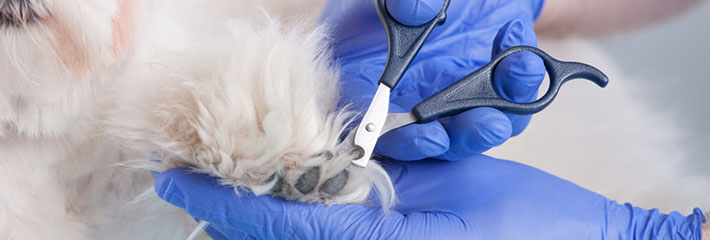
Care for your cat's nails with nail scissors or a file. Do this with two people if needed: one holds the cat while the other clips or files. A cat's nail consists of a living part and a dead part. Only clip the dead part, the tip of the nail, because the living part contains blood vessels and nerves. In cats with light nails the living part is dark pink and the dead part is white. If the nails are darker, you cannot see this transition. In that case, remove as little of the nail as possible.
Here is how to clip nails:
- Take a paw and gently squeeze the paw pad so the nails come out
- Clip the tip off each nail
- Reward your cat after her nails have been clipped
If you don't dare to clip or file the nails yourself, have it done by your vet or a groomer.
What nail problems can a cat get?
The three most common nail problems are:
- Ingrown nail
- Broken nail
- Infected nail
Ingrown nail: With an ingrown nail, it has grown in a circle and entered the skin. Ask your vet for help.
Broken nail: With a broken nail, first check whether the nail needs to be removed. Consult your vet if in doubt. If you clip the nail yourself, keep a bandage on hand in case it bleeds. If the nail is only slightly torn, just clip off the loose tip.
Infected nail: An infection can be caused by a bacterium, fungus or an accident. This can be so painful that your cat limps. A nail infection can be resolved with a course of antibiotics. When multiple toes are inflamed, an underlying disease may be the cause. Always consult the vet.